


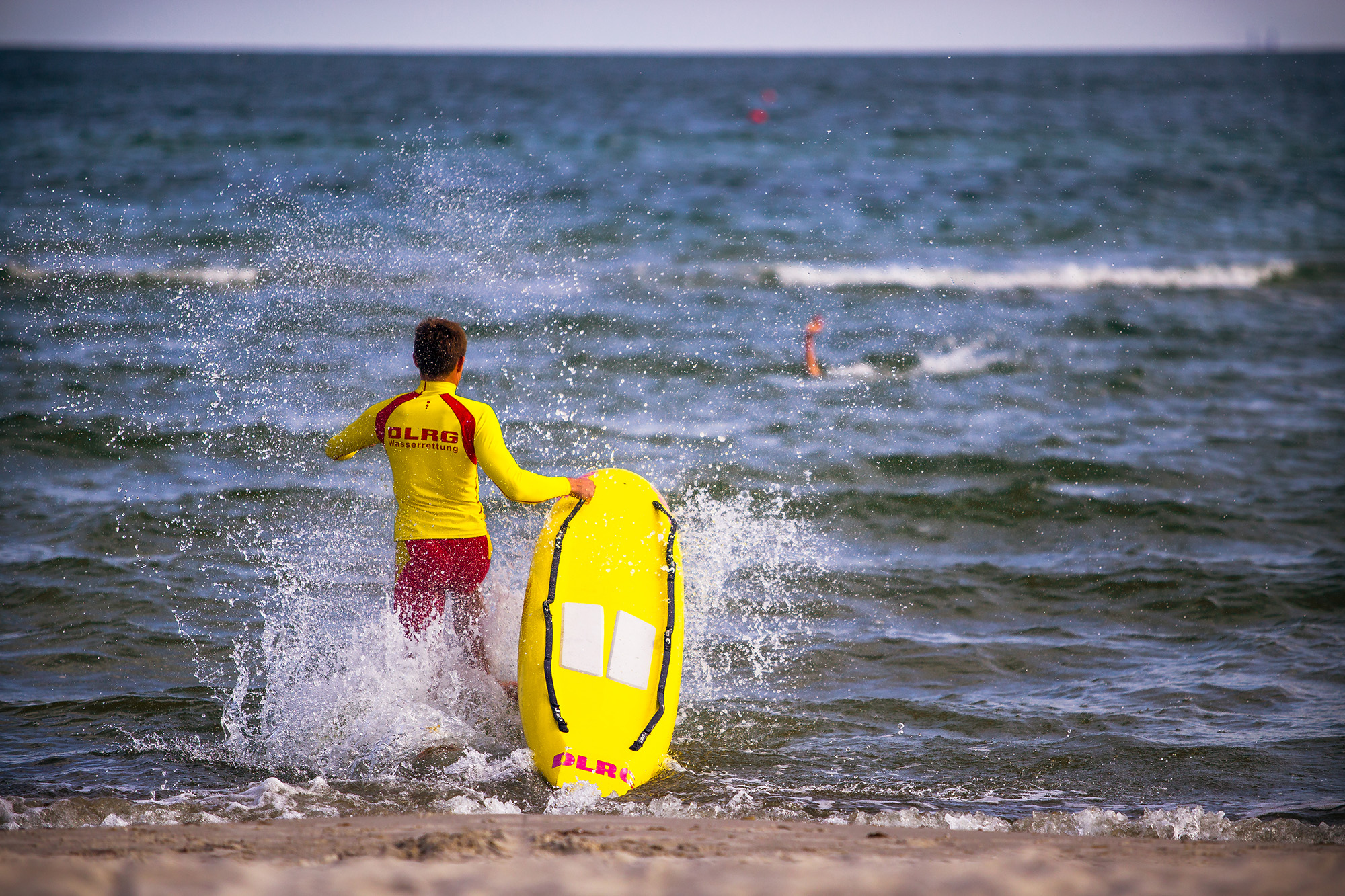
The sun on your face, sand beneath your feet, and a refreshing dip in the North Sea or Baltic Sea: For many people, a day by the water is simply part of summer. To ensure that a relaxing day at the beach is also a safe one, it’s worth following a few basic rules.
Together with the DLRG Schleswig-Holstein Regional Association, we’ve therefore compiled important tips to help you better assess dangers in and around the water.
1. It’s best to go in the water at supervised swimming areas
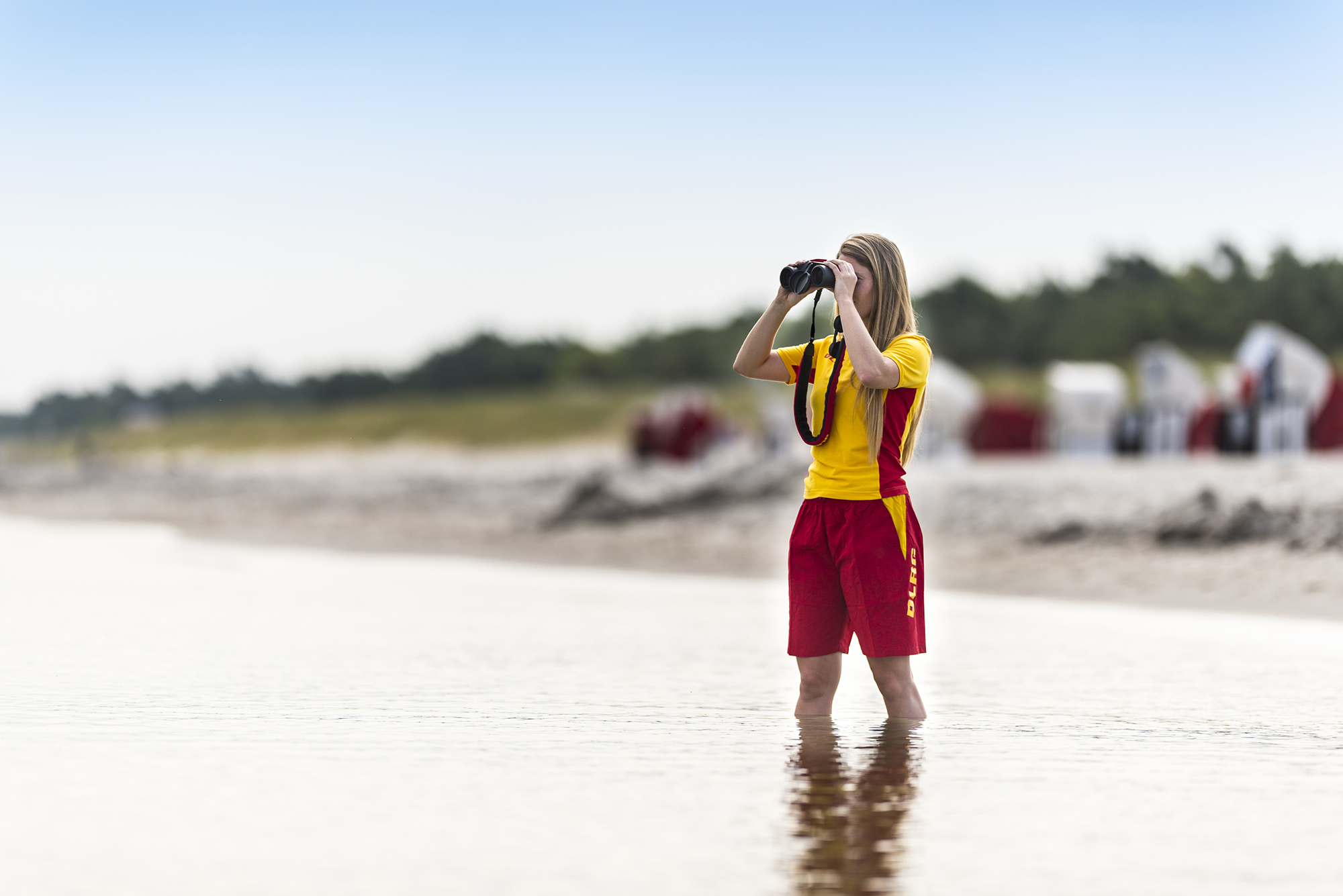
Conditions can change quickly, especially in open waters. Wind, weather, currents, and varying water depths all influence the situation on site. The DLRG therefore recommends using supervised swimming areas whenever possible and paying attention to the instructions of lifeguards as well as safety flags. Do not swim when the red flag is flying.
Even if the water looks calm at first glance: you should always realistically assess your own swimming abilities and the current conditions.
2. Always Keep an Eye on Children Near the Water
For families, splashing around is often one of the best parts of a day at the beach. It’s especially important to have an attentive adult present. Children should be supervised at all times when near or in the water — even if a lifeguard is on duty or they’re wearing flotation devices.
Good to know: The “Seepferdchen” (Seahorse) certificate is an important first step in learning to swim, but according to the DLRG, it does not yet serve as proof of the ability to swim safely. A person is considered a safe swimmer only after earning the German Bronze Swimming Badge.
3. Inflatable mattresses and water wings are no substitute for safe swimming
Inflatable mattresses, inflatable animals, or water wings are fun in the water — but they should not be confused with safety equipment. The DLRG expressly points out that such aids do not protect against drowning.
Special caution is therefore required, especially in windy conditions and in open waters.
4. Don’t just jump into the water
Quickly cool off and jump right in? Better not quite so fast. One of the DLRG’s swimming rules is to cool off before swimming and to only enter the water where swimming is permitted. You should only jump into the water where it is deep enough and free of obstacles.
Also, only go into the water if you’re feeling well and are up to the challenge.
5. Take the Weather and Conditions Seriously
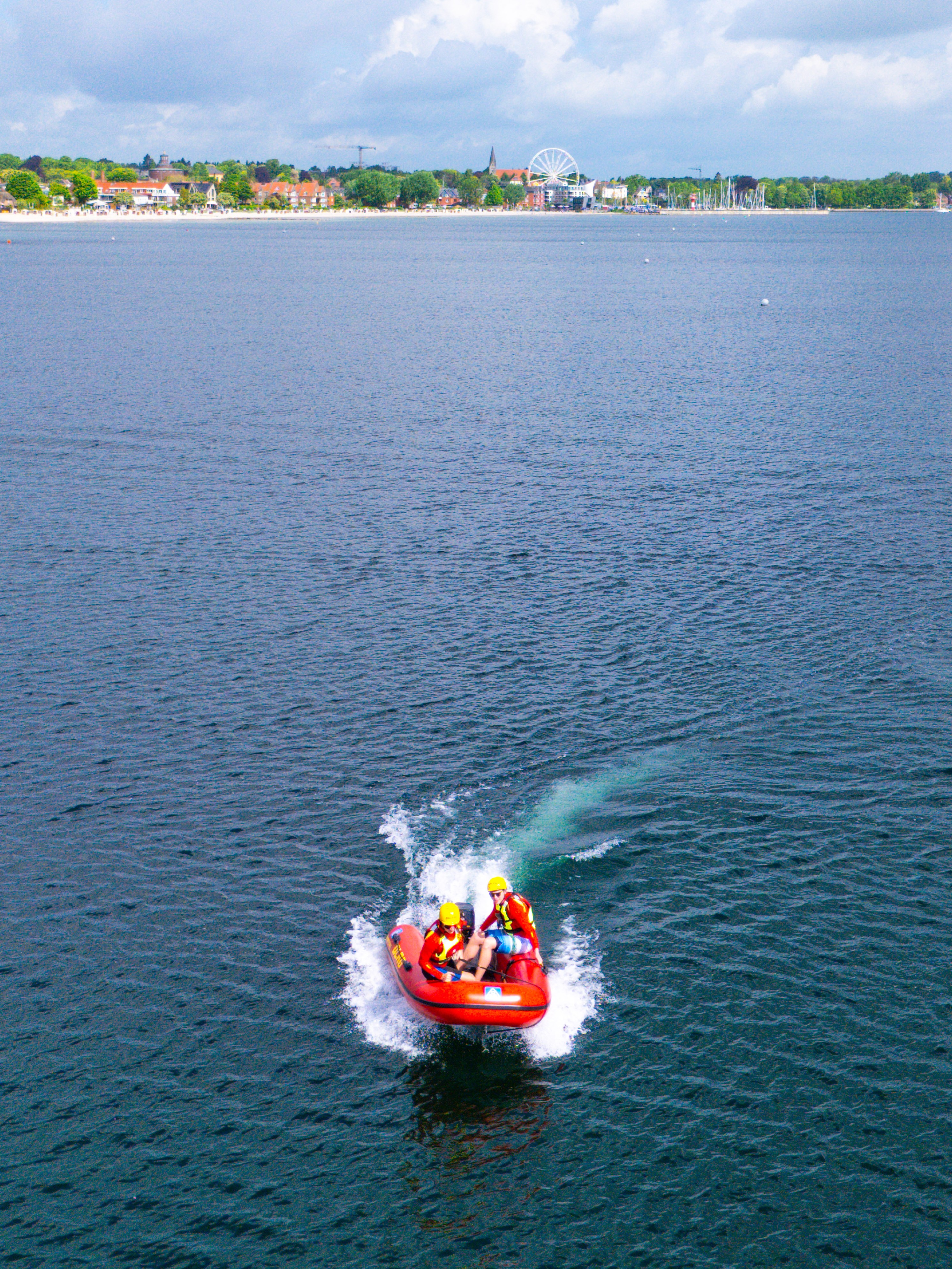
The weather on the coast can change quickly — so even during a day at the beach, it’s always a good idea to keep an eye on the sky and pay attention to on-site notices. If you see lightning, hear thunder, or experience heavy rain, you should get out of the water immediately. The DLRG warns that swimming during a thunderstorm is life-threatening. Wind and currents also play an important role in open waters. Therefore, follow the warnings and instructions of the local water rescue service.
6. A North Sea Special: Staying Safe on the Mudflats
For many, a walk through the mudflats is simply part of a North Sea vacation. At the same time, special rules apply here. Among other things, the DLRG recommends not venturing onto the mudflats alone. You should avoid mudflat hikes in poor visibility, during storms, fog, or thunderstorms. Exploring the mudflats with a knowledgeable mudflat guide is particularly safe.
7. In an Emergency: Help Without Putting Yourself in Danger
If someone gets into trouble in the water, quick yet thoughtful action is essential. Notify the lifeguards on site or call emergency services. When attempting a rescue, always remember: your own safety comes first. The DLRG strongly advises against putting yourself in danger while providing assistance.
In addition to proper preparation, a relaxing day at the beach naturally also calls for a cozy spot on the sand. At our BeachNow locations, you can book your beach chair online in advance. That way, your spot for the day is already reserved, and once you’re there, you can focus entirely on the sun, the sea, and staying safe in the water.
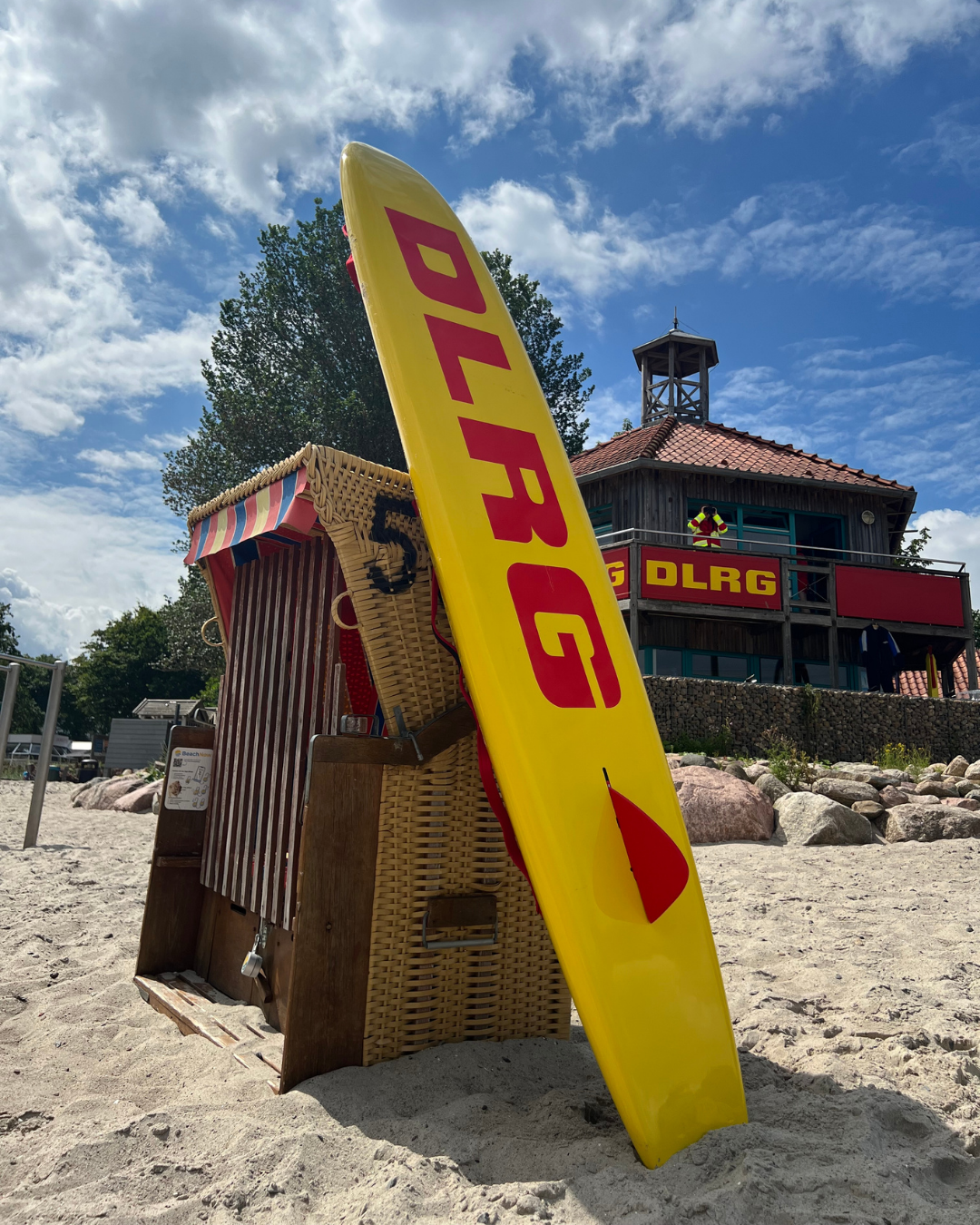
Promoting Safety on and in the Water for 100 Years
2026 is a special year for the DLRG Schleswig-Holstein Regional Association: The association is celebrating its 100th anniversary. Since its founding in 1926, it has been committed to safety in and around the water — including through swimming instruction, lifeguard training, prevention efforts, and the dedication of numerous volunteers.
The anniversary year is therefore not only a time to look back, but also to look toward the future. Under the motto “100 Years,” the state chapter is drawing attention to its work through various initiatives. These include, among other things, “100 Insights” into the work of the DLRG branches, as well as “100 Wishes,” which aim to support projects, training programs, and necessary equipment.
Support the Work of the DLRG
A large part of the DLRG’s work is carried out by volunteers. Donations help the state chapter, among other things, to purchase rescue equipment, provide training and continuing education for rescue personnel, and offer swimming instruction and prevention programs.
On the website of the DLRG Schleswig-Holstein State Association, you can make a one-time or recurring donation to support the association’s work.
For more information on the 100th anniversary and donation options, please visit the DLRG Schleswig-Holstein State Association e.V. directly.
After all, a relaxing day at the beach is even better when safety is a given.
You can find more tips for a safe day at the beach here:
Self-Rescue and Rescue of Others
Swimming Lessons with the DLRG
Bildquellen: DLRG Presse | Eckernförde Touristik und Marketing GmbH


